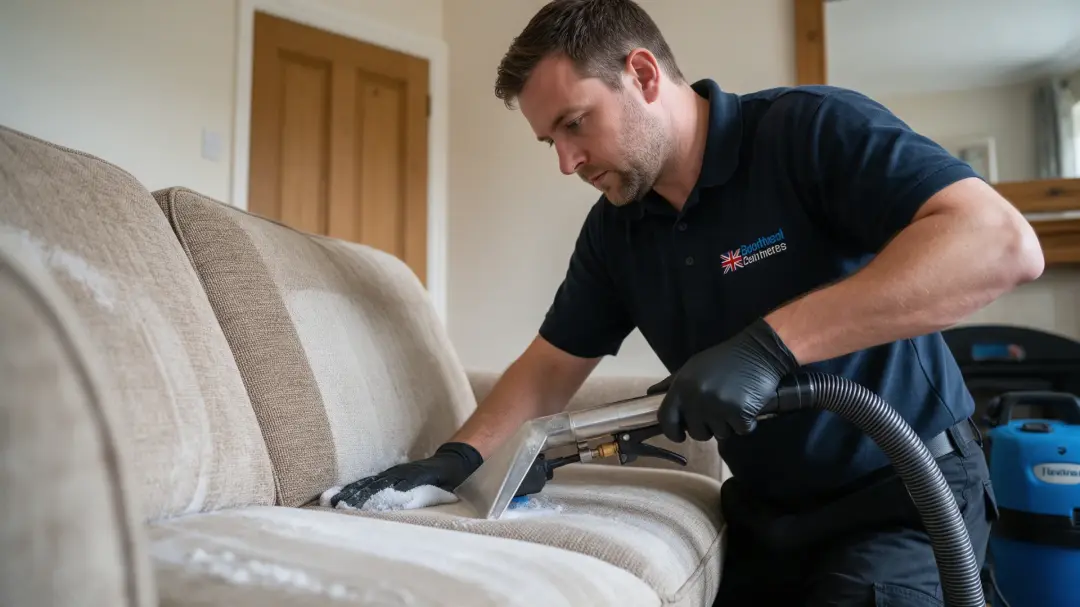
To remove pet odours from upholstered furniture, find the contaminated part first and check the furniture’s care instructions before adding liquid. Hair and surface dirt may respond to careful vacuuming; urine or other contamination inside cushion filling needs a different assessment. Spraying a deodoriser across the sofa can mask the smell without treating its source.
Locate the source beneath the obvious surface
Check the seat, seams, cushion undersides and removable covers. A smell concentrated in one cushion may involve the filling, while a general animal smell can come from hair, bedding or repeated contact with the same armrest. Note whether it is strongest while the furniture is damp or after the room has been closed.
UK Pet Food’s 2026 figures estimate around 13 million pet cats in the UK. That is an ownership estimate, not an odour-prevalence statistic. It provides context for the need to maintain shared seating without assuming every pet household has the same problem.
Check fabric instructions before applying a product
Look for the manufacturer’s care label, fibre information and any restriction on water-based or solvent cleaning. A removable cover is not automatically machine washable. The fabric, dyes, cushion structure and trim all influence what can be done safely.
If the label is missing or the material is delicate, ask a cleaner to assess it. Do not transfer a carpet treatment onto a sofa simply because the bottle mentions pet stains. Test a permitted product in a hidden area and allow it to dry before deciding whether it has affected colour or texture.
Remove dry debris and absorb a fresh accident
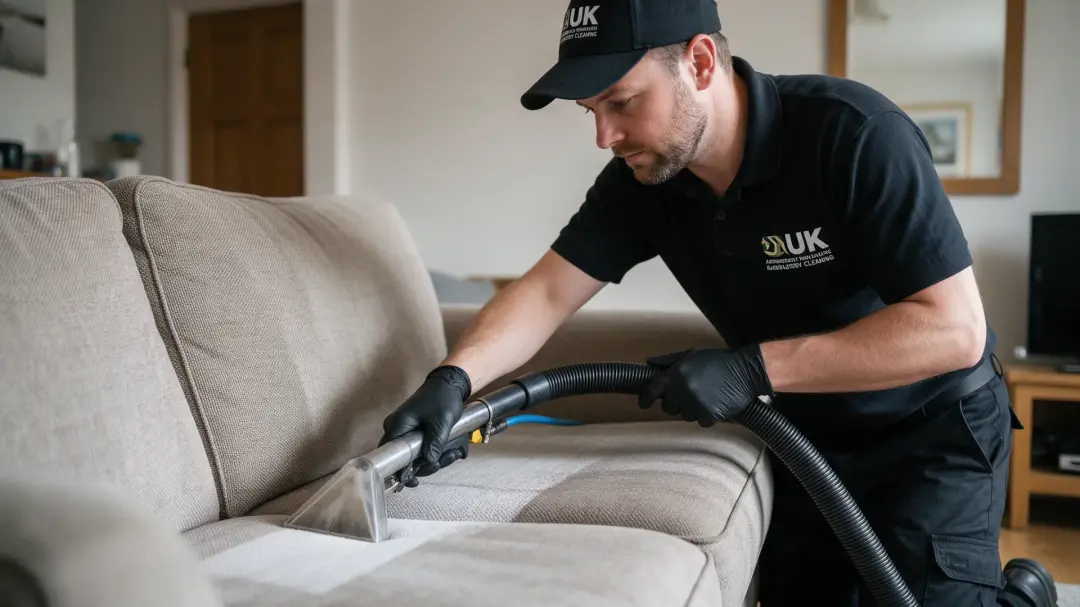
Use a clean upholstery attachment to remove loose hair and dirt where the care instructions allow. Work gently around piping and seams. With a fresh liquid accident, absorb as much as possible using plain white cloths, avoiding pressure that forces it deeper.
Follow the approved treatment instructions rather than improvising a large rinse. Upholstery filling can retain moisture after the cover feels dry. Keep pets away during treatment and do not return cushions to normal use until the cleaner or manufacturer’s drying advice has been met.
Choose odour treatment for the contamination
Enzyme-based products can help with some organic contamination, but suitability for the fabric and application method still matters. Follow the stated contact time and removal instructions. Repeated fragrance sprays can leave residues and make later assessment harder.
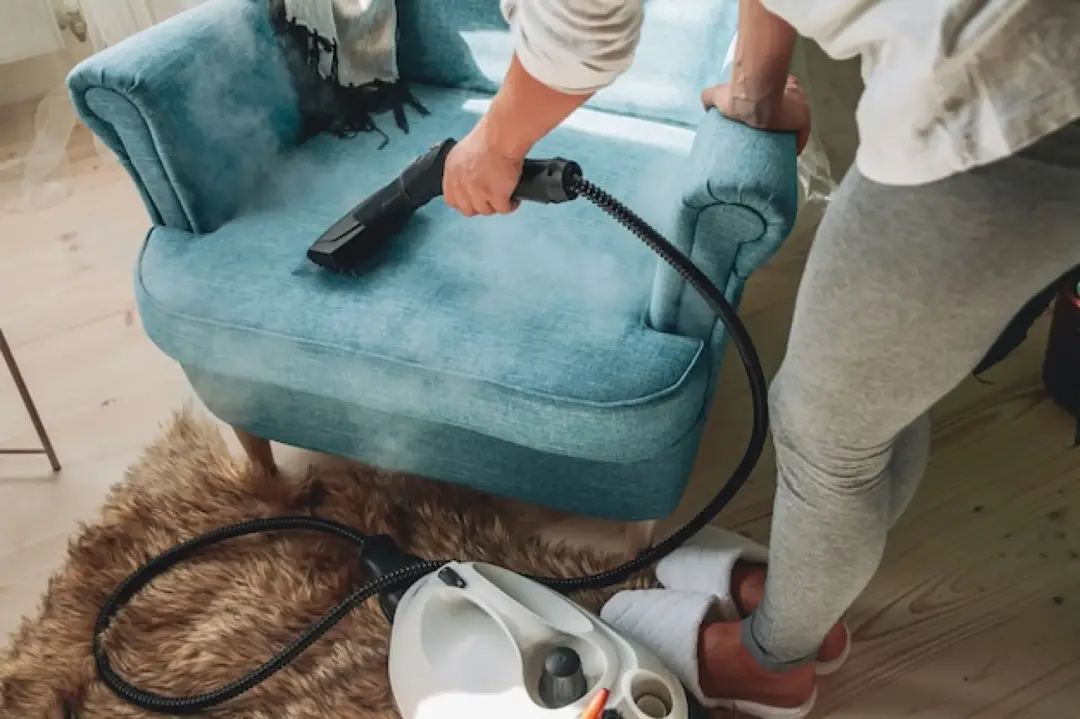
Humane World for Animals advises against steam treatment of urine odours on carpet and upholstery. Avoid an improvised heat treatment, ammonia or combinations of household cleaners. Tell the professional what products have already touched the furniture so treatment can account for those residues.
Recognise when the filling needs attention
When the odour returns after the fabric dries, contamination may remain in cushion filling or another layer. A surface clean alone cannot necessarily reach it. Discuss access to the filling, the possibility of repeated treatment and whether replacement of a contaminated component is more appropriate.
Do not accept a guaranteed result without an inspection. Old contamination can alter dyes, and damaged foam or fabric may require another remedy. The professional should distinguish improvements expected from cleaning from issues outside the treatment’s reach.
Prevent the same seating problem returning
Use washable protection where the pet rests, provided it does not trap dampness against the furniture. Maintain bedding separately and give treated seating time to dry fully. Keep the animal away from the affected area while an alternative resting place is available.
New or repeated toileting accidents also deserve veterinary advice. For homes in Witney, Ambassador Carpets can discuss upholstery cleaning and the limits of odour treatment. Share the furniture label and accident history when making the enquiry so the assessment starts with useful information.
Sources and further reading
Research checked on 13 October 2026. Figures retain their stated reporting periods.
Summary
Successful odour treatment depends on identifying contamination and protecting the upholstery, including the layers beneath its cover. If the smell persists after suitable surface care, seek an assessment before adding more products or heat.