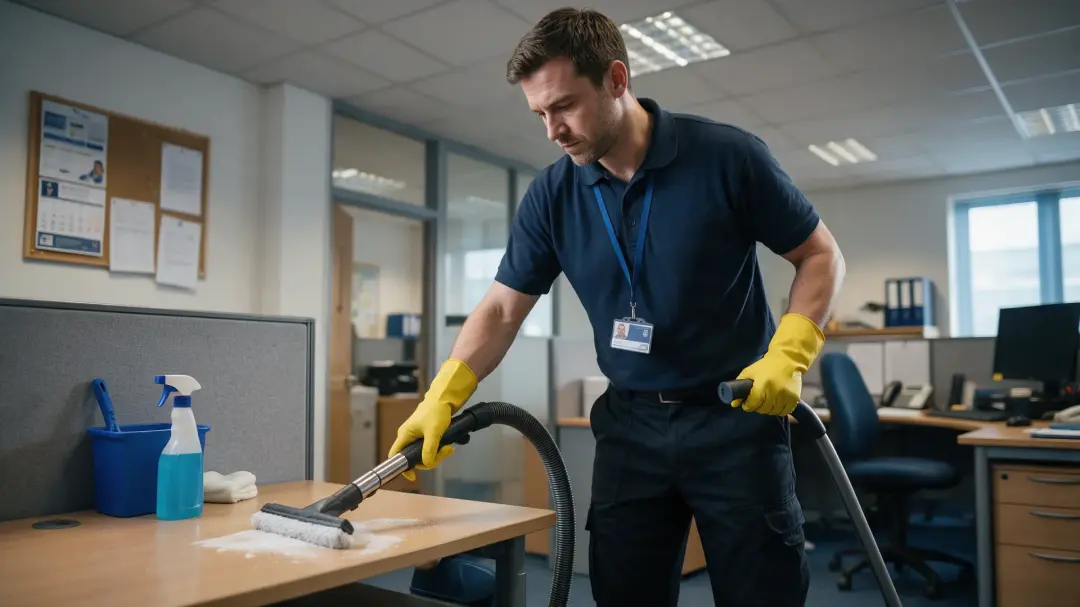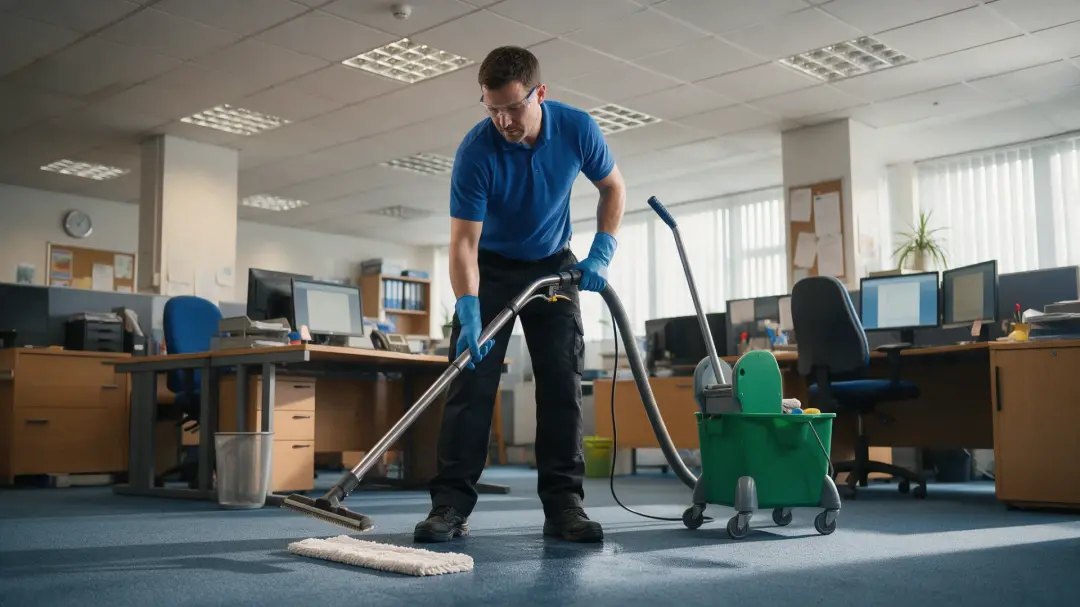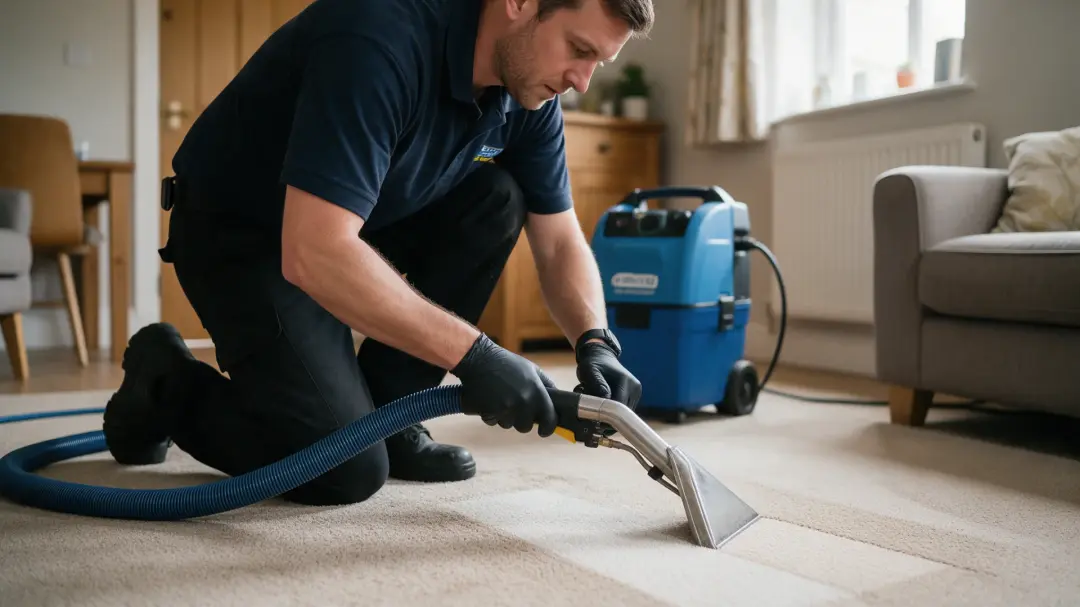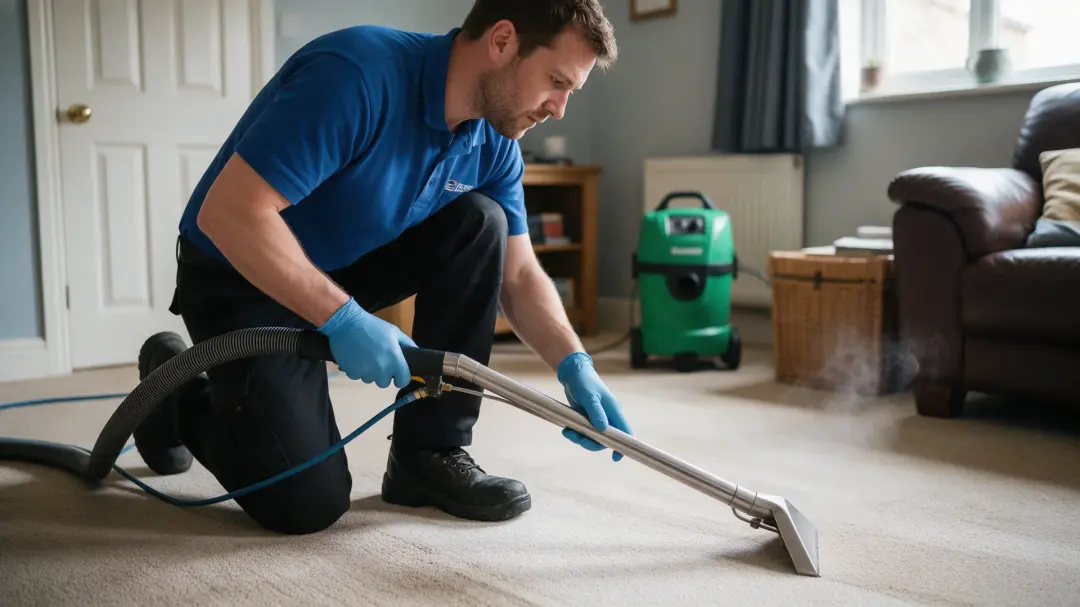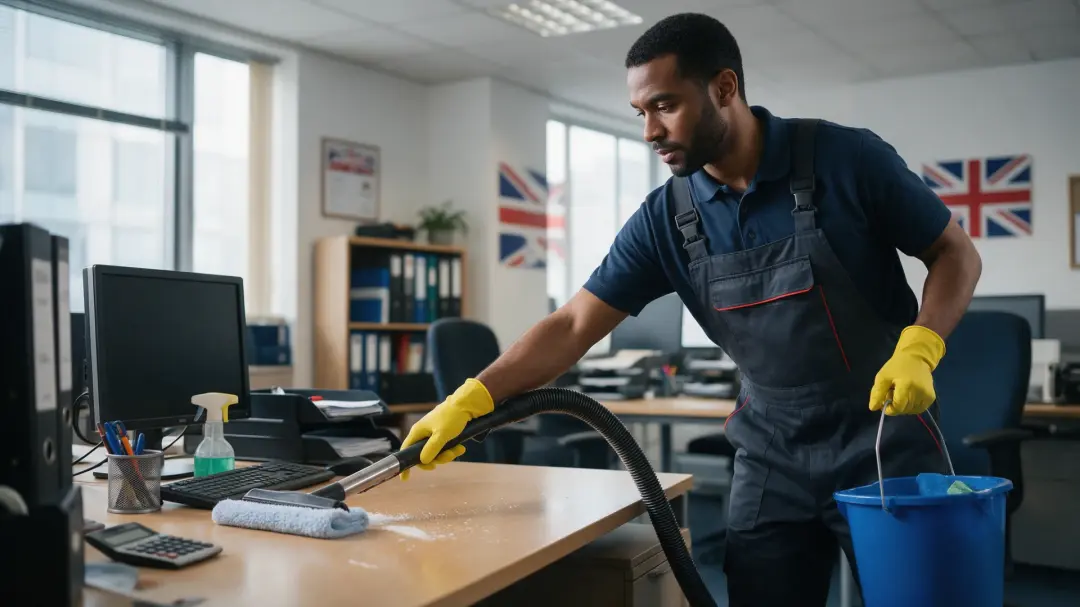
Create a workplace cleaning schedule by listing the spaces people use, defining the result required in each one and assigning a named owner and frequency to every task. Add a response route for spills and unexpected mess. A calendar alone is not enough: someone must check that the work was completed and the area is ready to reopen.
Map usage before assigning frequencies
Divide the premises into entrances, work areas, meeting rooms, kitchens, toilets, storage and circulation routes. Note opening hours, visitor flow and when occupancy is highest. A meeting room booked continuously needs a different routine from one used twice a week.
Walk the building with the people who clean it. Identify difficult access, sensitive equipment and areas where dirt enters. Include entrance mats and transitions between carpet and smooth flooring, since a schedule based only on room names misses these practical details.
Write tasks with a visible end result
Replace vague wording such as “clean office” with observable tasks: empty specified waste bins, vacuum accessible carpet, clean approved desk surfaces and replenish washroom supplies. State any exclusions, such as staff papers, personal equipment or locked rooms.
Define what completion looks like. For a kitchen worktop, it might mean cleared food residue and the approved cleaning procedure completed. For a carpet route, it might mean loose soil removed and fresh spills reported. Do not use a smell of disinfectant as proof of cleanliness.
Build daily, weekly and periodic work streams
- Daily or according to occupancy: check waste, washrooms, kitchen surfaces, entrances and busy floor routes.
- Weekly or at a suitable interval: attend to accessible edges, low-use spaces and tasks missed by routine traffic-route care.
- Periodic: assess carpets and upholstered seating, clean high-level accessible surfaces safely and service cleaning equipment.
- Event-driven: respond to spills, leaks, unusual contamination and larger meetings without waiting for the next scheduled visit.
These are planning categories, not a fixed standard for every workplace. Food businesses, clinical spaces and specialist premises need their own requirements and risk assessments.
Put drying and access into the schedule
HSE’s 2024/25 injury data shows that slips, trips or falls on the same level accounted for 30% of non-fatal employee injuries reported under RIDDOR. This is a reported-injury share, not the proportion caused by cleaning. It makes access arrangements a sensible part of floor-care planning.
Schedule wet work when pedestrian routes can be controlled. Record who installs barriers, checks dryness and reopens the area. Keep an alternative accessible route available where required. Avoid planning carpet treatment immediately before a room must host a meeting.
Give every task an owner and a record
Use a simple record containing area, task, frequency, person or provider, completion time, exceptions and reviewer. Assign cover for absence. A checked box should mean the specified task was done, not merely that somebody entered the room.
For example, if the receptionist reports an entrance spill, identify who responds during opening hours and who informs the evening cleaner. This prevents each team assuming the other has already handled it. Escalate damaged flooring or leaks to maintenance separately.
Review the schedule against real results
Check the busiest areas after cleaning and again during normal use. If a washroom runs out of supplies by midday, adjust replenishment rather than simply increasing end-of-day cleaning. If carpet traffic lanes stay dark despite vacuuming, consider a specialist assessment.
Keep periodic carpet care distinct from general housekeeping. For premises in Oxford, Ambassador Carpets can discuss commercial carpet cleaning needs. Update the schedule when occupancy, room use or opening hours change, and retain enough detail to explain why a frequency was chosen.
Sources and further reading
Research checked on 13 October 2026. Figures retain their stated reporting periods.
Summary
A workable schedule combines clear tasks, ownership and safe return-to-use checks. Review it when conditions change, and include specialist carpet maintenance as a defined part of the plan where routine vacuuming is no longer enough.