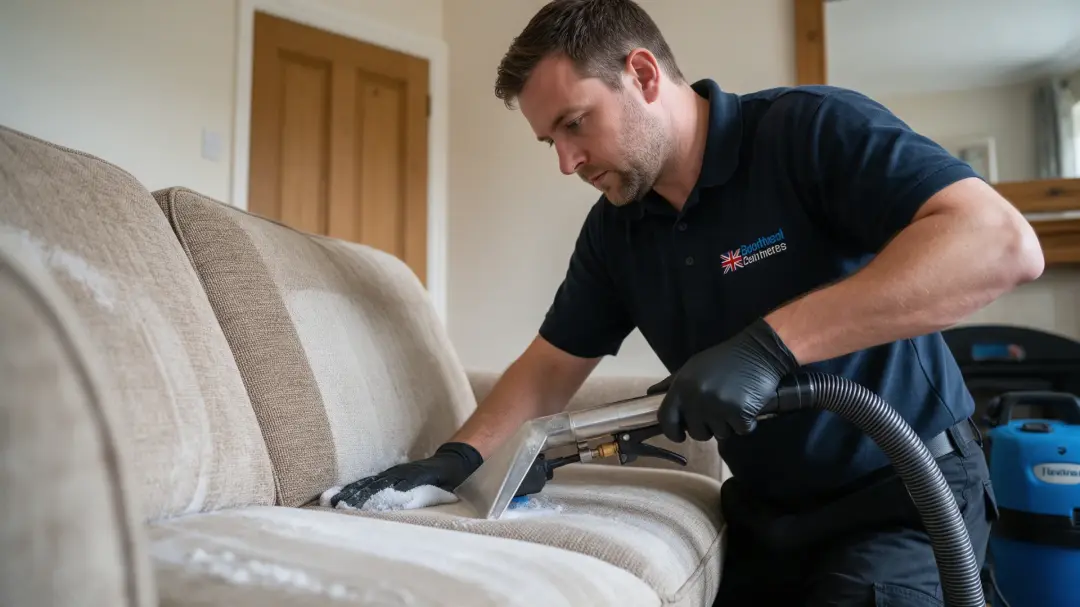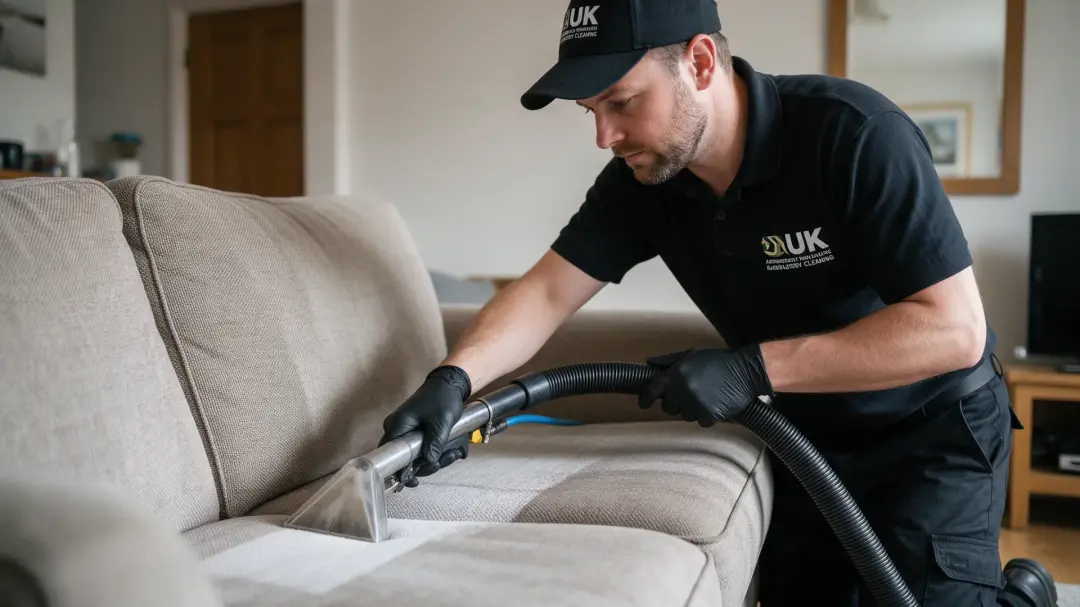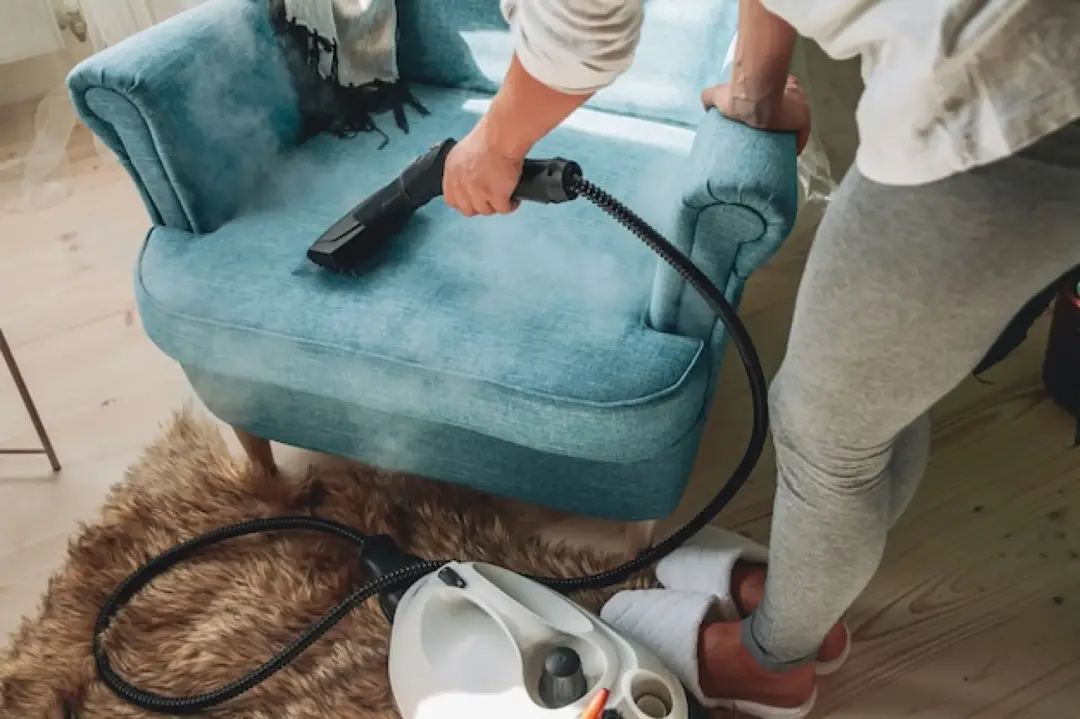
Choose an upholstery cleaning service that assesses your furniture before proposing a method, explains likely results and provides a clear quotation. The most useful comparison is not which firm promises the fastest clean. It is which one can describe how it will protect your fabric and handle the particular soil, stains and construction involved.
Send useful furniture details before requesting a quote
Provide photographs of the complete item, stained areas and care label. State whether covers are removable, whether the furniture reclines and whether the underside or filling has been affected. Mention pets, water damage and any earlier cleaning attempts.
A description such as “three-seat sofa” can hide large differences in fabric area and construction. An item with loose cushions, decorative trim and several upholstered sides may require more work than a simple fixed-seat sofa. A useful quotation should account for those differences.
Look for an assessment-led method
Ask how the cleaner checks fibre type, colourfastness, existing wear and the manufacturer’s instructions. A water-compatible fabric and a delicate water-sensitive material should not automatically receive the same process. The method should follow the item’s needs, not just whichever machine the provider owns.
The ANSI/IICRC S300 upholstery standard has a 2025 second edition. Its published overview includes inspection, cleaning methods and stain treatment. It is a reference for professional practice, not evidence that a particular business is certified; ask the provider about its own training and experience.
Check the quotation’s scope and exclusions
- Which upholstered surfaces and loose cushions are included?
- Is stain or odour treatment included or separately assessed?
- Who moves the item and protects nearby flooring?
- Are access, travel, minimum charges or VAT included where applicable?
- What happens if the inspection shows the fabric cannot safely receive the quoted method?
Keep the answers in writing. Confirm whether fabric protector is optional and appropriate for the material, rather than accepting it as an automatic add-on.
Ask for realistic stain expectations
Dirt removal and restoration of damaged colour are different things. A worn armrest, a bleach mark or old dye migration may remain after a good clean. A provider should identify limitations before treatment and explain what improvement is realistic.
Ask how a test patch will be assessed and what happens if it suggests an unacceptable risk. Be cautious about universal “like new” promises. A firm willing to explain why it should not clean an item may give you more useful advice than one that accepts every job.
Compare cleaning with other options
The ONS August 2026 inflation bulletin reports annual price growth of 0.8% for furniture and household goods. This broad index is not an upholstery-cleaning price list and cannot determine whether cleaning is worthwhile for your sofa. It does reinforce the need to compare current quotations rather than rely on an old replacement price.
Consider the item’s overall condition, replacement cost and whether its problem is removable soil or failing fabric and structure. Cleaning can be appropriate for a sound item, while broken support or deteriorating filling may need repair first.
Check drying, insurance and aftercare
Ask for expected drying conditions and when seating can be used again. A responsible answer accounts for fabric, method and ventilation rather than promising one time for every item. Check relevant insurance and how concerns after cleaning should be raised.
Customers in Oxford can contact Ambassador Carpets about the upholstery service, supplying photographs and label details. Do not assume accreditations, specialist capabilities or guarantees that have not been confirmed. Choose on the quality of the assessment and written scope as well as the price.
Sources and further reading
Research checked on 13 October 2026. Figures retain their stated reporting periods.
Summary
Compare providers through the questions they ask about your furniture and the clarity of their proposed treatment. A fabric-specific assessment, written scope and realistic aftercare advice provide a stronger basis for booking than an unsupported restoration promise.