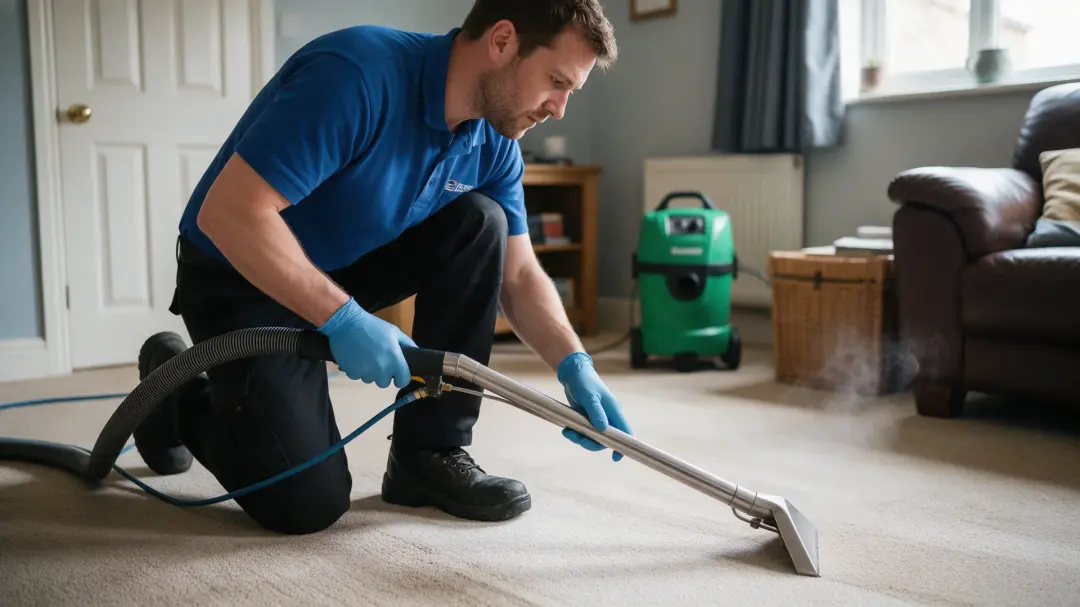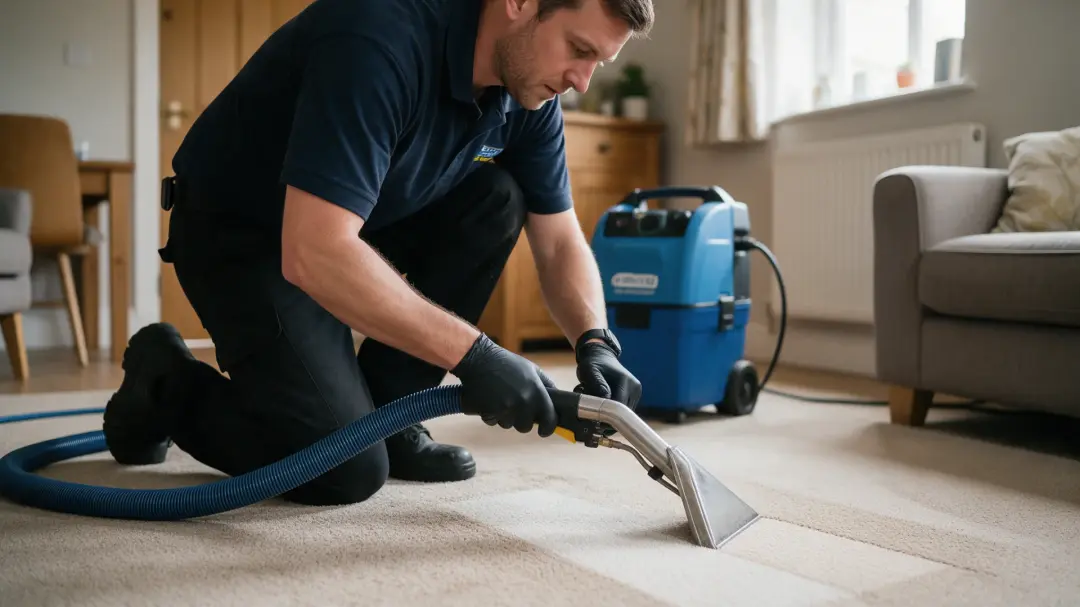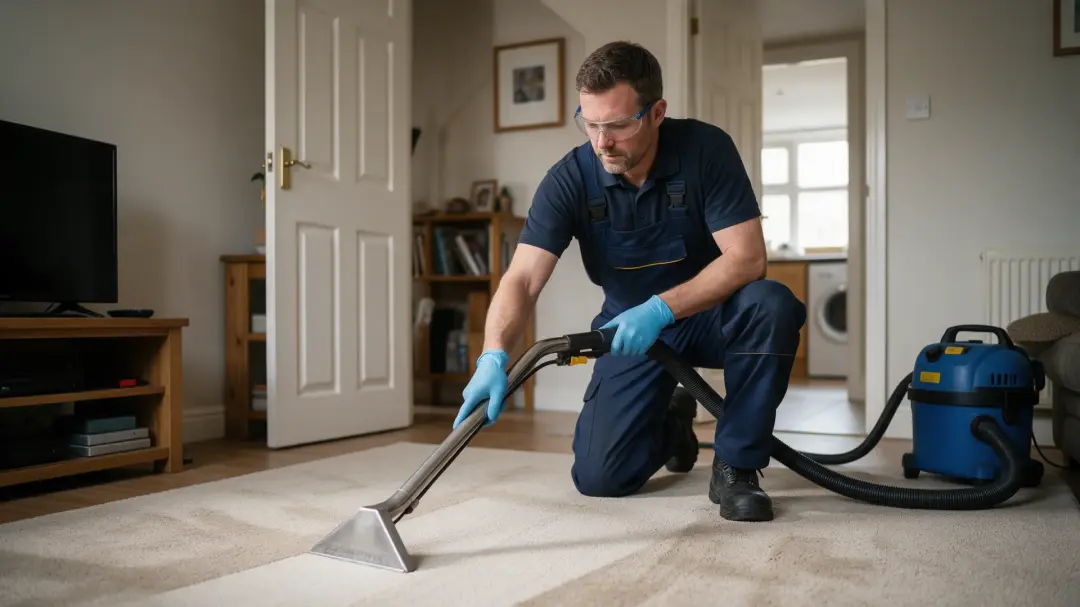
For many households, professional carpet cleaning every 12 to 18 months is a useful starting point, subject to the manufacturer’s instructions. Bring that date forward when tracked-in soil, spills or pet accidents build up. The useful question is how quickly your rooms become soiled, rather than whether every carpet must be cleaned on the same day.
Start with the manufacturer’s instructions
Check the warranty or care booklet before setting a date. It may specify a cleaning method, approved products or evidence of maintenance. Keep invoices alongside the carpet details. General advice cannot override instructions for a particular fibre, backing or installation.
The Carpet and Rug Institute’s current care guidance recommends deep cleaning every 12 to 18 months, or sooner where needed. This is a maintenance recommendation, not a claim that all carpets become unsafe after a fixed number of months.
Adjust the interval to the room
A spare bedroom used occasionally normally collects less walked-in grit than the stairs and living room. Inspect the routes between entrances, seating and the kitchen. Dark lanes, a sticky feel or persistent marks after vacuuming are better triggers for an assessment than the calendar alone.
- Light use: begin with the manufacturer’s interval and inspect the carpet between appointments.
- Busy family rooms: review traffic lanes regularly and consider an earlier clean when vacuuming no longer improves their appearance.
- Heavy soil or repeated accidents: arrange a targeted assessment rather than waiting for the next routine visit.
Allow for pets and changing household use
UK Pet Food’s 2026 survey estimates that 62% of UK households own a pet. This is a national ownership figure, not a cleaning-frequency statistic. It explains why a single timetable cannot fit every household: a home with a shedding dog and garden entrance has different maintenance demands from an infrequently used flat.
Look beyond visible hair. Check sleeping places, the route from the back door and areas where accidents recur. A local odour may need specialist attention before a whole-room maintenance clean. More home working, young children or a room becoming a play area can also change how quickly soil accumulates.
Keep vacuuming between professional visits
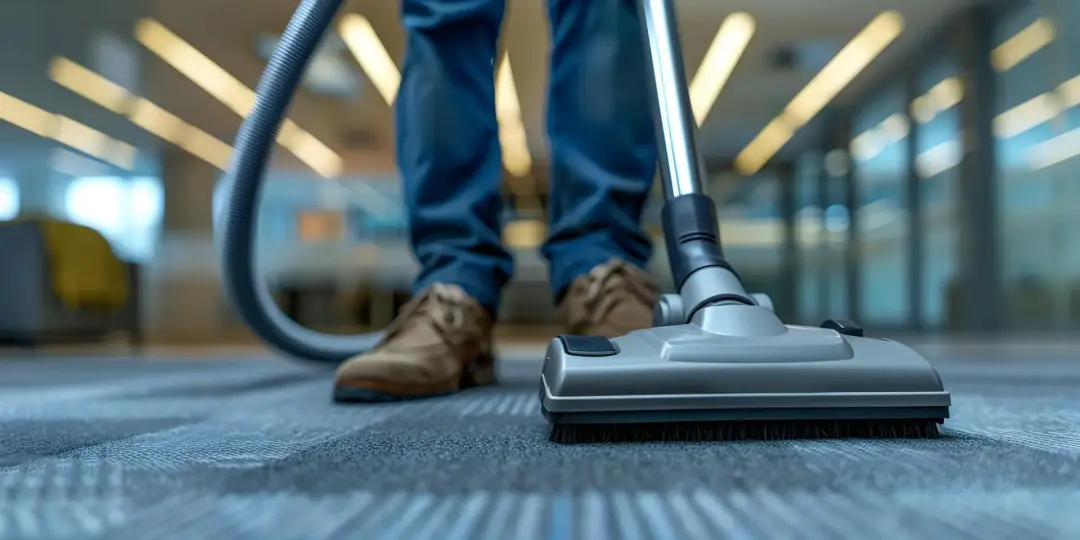
Routine vacuuming removes loose dry soil. A deeper clean addresses soil that ordinary maintenance leaves behind. Neither makes the other unnecessary. Use the head recommended for the carpet, especially on loop pile, and make slow passes along the busiest routes.
Entrance mats and a shoes-off routine reduce incoming dirt. Treat spills with compatible products, avoiding excess detergent. Residue can make a patch attract dirt again and give the impression that the carpet needs another visit sooner than it really does.
Choose a practical appointment date
Pick a day when the cleaned rooms can stay clear until ready for use. Drying depends on the method, carpet, ventilation and indoor conditions; a universal two-hour promise is not a sound basis for planning. Ask about moving furniture and when rugs or protective sheets can go back.
For households in Oxford, wet-weather mud may make entrance areas worth reviewing after wetter months. A leak or persistent damp smell needs investigation, however, rather than simply another routine cleaning date.
Keep a short carpet care record
Record the material if known, installation date, last clean and persistent marks. Photograph traffic lanes in consistent light. Reassess after changes in household use, and tell the cleaner what previous treatments were applied. This helps distinguish a cleaning need from wear and directs the budget towards rooms that will benefit most.
Sources and further reading
Research checked on 13 October 2026. Figures retain their stated reporting periods.
Summary
Use manufacturer guidance as your baseline, then adjust for how each room looks and feels after ordinary care. If traffic lanes remain dull or pet areas need attention, ask Ambassador Carpets about a carpet cleaning plan suited to your home.