Wondering how often should an office carpet be cleaned? Discover expert advice on maintaining a fresh, professional workspace with regular carpet cleaning routines.
Office carpets are used every day by staff, visitors, and customers, so they can quickly collect dirt, dust, stains, and moisture. Knowing how often to clean them can help keep your workplace looking fresh, professional, and welcoming. This article explains what affects your carpet's cleanliness, when deeper cleaning may be needed, and how a clear cleaning routine can protect your carpet.
Why regular office carpet cleaning matters
Regular carpet cleaning matters because carpets are used every day by staff, visitors, and customers, and over time, dirt, dust, crumbs, and moisture can build up within the fibres. Even when a carpet looks clean, there can still be dirt hidden underneath that could affect the look and feel of your workplace. Regular cleaning helps keep your office looking and feeling fresh and tidy.
Dust, pollen, and other small particles can also get stuck in your carpet, which can be released into the air when people walk across it. This can be a problem for staff who have allergies or breathing concerns. Cleaning your carpet helps remove these particles and improves the general cleanliness of your space. Regular carpet cleaning also helps protect the carpet itself, since dirt can wear down the carpet fibres and make them look flat, dull, or damaged.
What affects how often carpets need cleaning?
Several things can affect how often your carpet needs cleaning, and one of the biggest factors is foot traffic. A busy office with staff, visitors, and customers walking through every day will naturally collect dirt faster than a smaller, quieter workplace would. Carpeted entrances, corridors, reception spaces, and shared kitchens often need more attention because they are used so often.
The weather is another important factor, especially in the UK, since rain, wet shoes, leaves, and grit can all be carried indoors and pressed into the carpet fibres. The colour and type of carpet you have can also affect its cleaning schedule. Light carpets may show marks sooner, while thicker carpets can retain more dust and dirt below the surface. By understanding these factors, you can plan a cleaning routine that keeps your office looking clean, fresh, and professional.
Daily care for office carpets
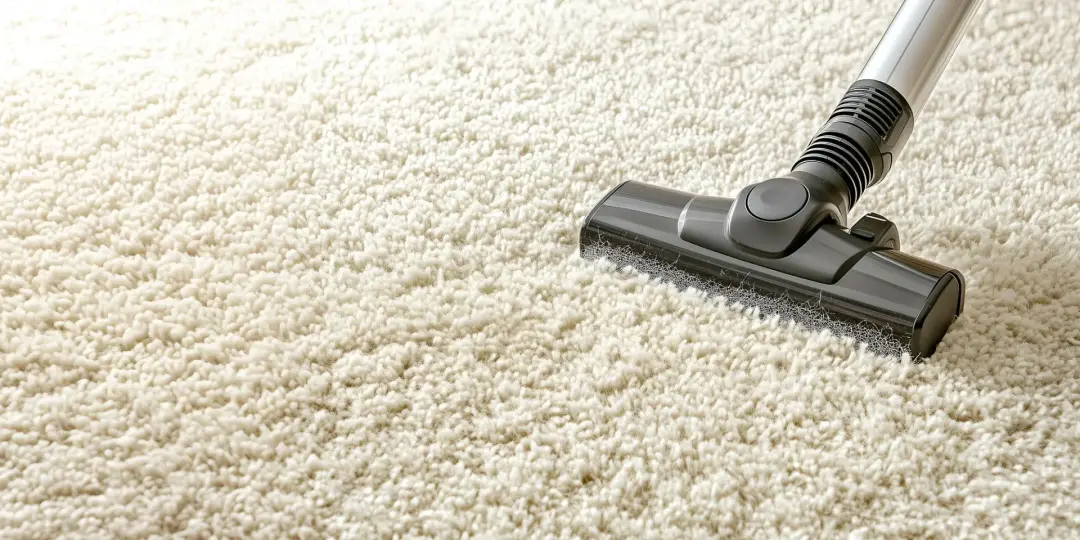
Daily care usually consists of vacuuming busy areas, such as entrance ways, corridors, reception spaces, meeting rooms, and shared walkways, because these areas often collect the most dirt.
Emptying your bins, clearing food waste, and removing loose debris from the floor can also help you prevent dirt and stains from spreading across the carpet, too.
Another key part of daily care is dealing with spills as soon as they happen. Acting quickly can help you reduce the risk of lasting stains and bad smells. Any entrance mats should also be checked, cleaned, and kept in the right place, since they can help stop mud and moisture from being trudged across the office.
Weekly office carpet maintenance
Weekly office carpet maintenance can make a big difference to the look, feel, and lifespan of your carpet. While daily vacuuming can help remove loose dirt, weekly maintenance gives your carpet a better level of care via deep vacuuming, spot cleaning, stain treatments, freshening high-use areas, and checking for early signs of wear and tear. These steps help keep the carpet cleaner for longer and stop small problems from becoming harder to manage.
One of the main advantages is that weekly care helps remove dirt before it becomes trapped in the carpet fibres. When dirt, grit, and dust are walked into the carpet, they can act like tiny rough particles, and over time, this can damage the fibres and make the carpet look flat or tired. Regular maintenance helps reduce this damage and keep the whole office looking cleaner.
When to book a deep carpet clean
While daily vacuuming and weekly care are useful, deeper cleaning is often needed to remove dirt, dust, stains, and odours that have built up over time. For many offices, a deep carpet clean every 6 to 12 months is a good starting point, but busier workplaces may need it more often.
High-traffic areas, such as entrances, corridors, stairs, reception areas, and meeting rooms, may need to be deep cleaned sooner compared to quieter areas. This is because these areas collect more dirt from shoes, wet weather, and daily use. Offices often deal with more rain, mud, grit, and moisture during autumn and winter, too, so booking a deep clean during or after these seasons can be a good idea.
A deep clean should also be booked when your carpets start to look flat, dull, stained, or marked, even with regular vacuuming. Bad smells, allergy concerns, or visible dirt are also signs that your carpet needs to be deep cleaned.
Cleaning carpets in high-traffic areas
It's important to clean carpets in high-traffic office areas because these areas collect dirt faster than quieter parts of the building. Entrances, corridors, stairs, reception areas, meeting rooms, and shared walkways are used throughout the day by staff, visitors, and customers, and as people move around, they can traipse in dust, mud, grit, moisture, and small debris from outside. If this isn't removed regularly, it can quickly make the carpet look dull, stained, and worn out.
High-traffic areas also suffer from constant footfall, which can weaken the fibres over time and shorten the carpet's lifespan. Clean carpets often improve the overall appearance of your office, since it's one of the first spaces people see. A clean reception or entrance can make the workplace feel more professional, cared for, and welcoming.

How office size affects cleaning needs
Your office’s size can have a big effect on how often your carpets need cleaning. Larger offices usually have more floor space, more staff, and more shared areas, which means that dirt can build up in different places at different times. In this case, your entrances, corridors, kitchens, meeting rooms, and reception areas may need more care because they are used by many people throughout the day.
Carpets in large offices may also need to be cleaned in sections to help reduce disruption and allow staff to keep using the workplace while the cleaning takes place. Some areas may only need light maintenance, while busy areas may need to be deep cleaned.
The same goes for smaller offices, too. Although they might not have the same amount of space, they still need to be cleaned regularly. Because staff often use the same walkways, desks, and shared spaces every day, dirt can become focused in a smaller area, which can make wear and stains more noticeable.
The layout of the office is also important. Open-plan offices, separate rooms, stairs, and narrow corridors can all affect how dirt spreads. Therefore, matching the cleaning routine to the size and layout of your office can help you keep your carpets clean for longer.
Signs your office carpet needs cleaning
There are several signs that your office carpet needs cleaning, and one of the biggest signs is a dull or tired appearance. If the carpet no longer looks fresh, it's likely that dirt and dust may be trapped deep within the fibres. High-traffic areas, such as entrances, corridors, stairs, and reception spaces, often show signs of this first because of how often they're used.
Visible stains are another sign that it needs to be cleaned. Spills from drinks, food, ink, or mud can leave marks that make the office look untidy. If stains are left for too long, they can also become harder to remove, and they may affect the overall appearance of your workplace.
Bad smells can also suggest that the carpet needs cleaning, and this is because carpets can retain moisture, food crumbs, dust, and other small particles, which can lead to unpleasant odours over time. Regular cleaning can help restore your carpet’s appearance, freshness, and comfort.
How clean carpets support staff health
Office carpets are used every day, and they are notorious for collecting dust, dirt, pollen, food crumbs, moisture, and other small particles. When these particles build up, they can affect the freshness of your workplace and cause discomfort for staff, especially those with allergies, asthma, or breathing issues.
Regular carpet cleaning helps remove any trapped dust and allergens from the carpet fibres, which can improve the general cleanliness of your office and reduce the amount of dust that's disturbed when people walk around. Keeping your carpets clean also helps you improve your workplace standards; this is because staff are more likely to feel comfortable and valued in a clean, well-kept office.
Why professional cleaning is worth it
Office carpets deal with constant foot traffic, spills, dust, dirt, and moisture from shoes, and over time, this can leave the carpet looking dull, marked, and worn out. A professional can remove this dirt from within the fibres, and improve both the appearance and freshness of your workplace, as well as protect the carpet and extend its lifespan.
Professional cleaners often begin their process by checking for stains, worn areas, heavy foot traffic, and any parts of the carpet that need extra attention. The carpet is then vacuumed to remove loose dust, dirt, and debris, and this is important because it helps them prepare the carpet for a deeper clean.
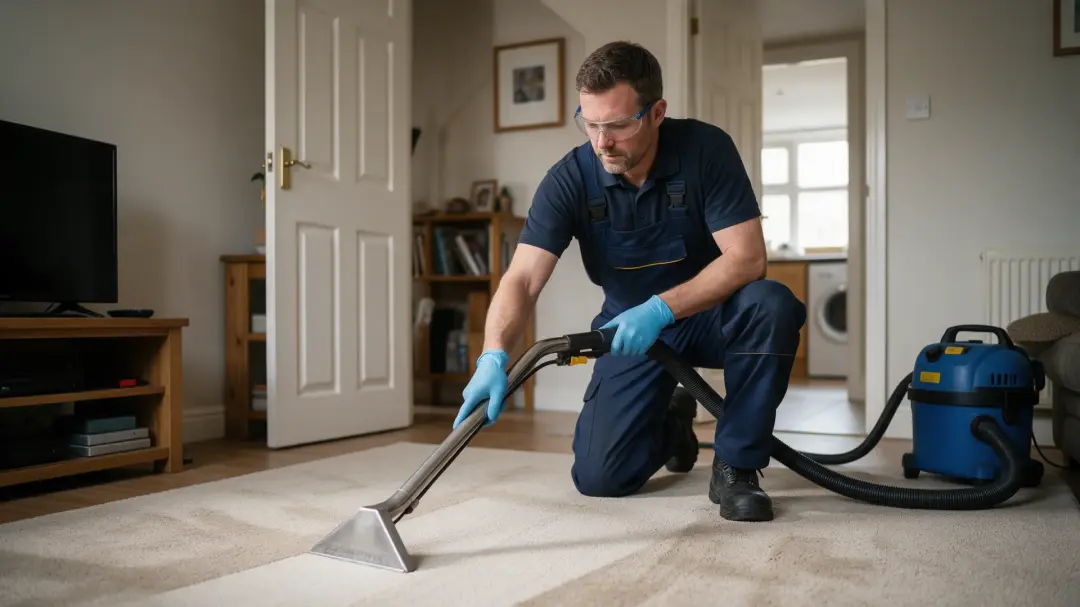
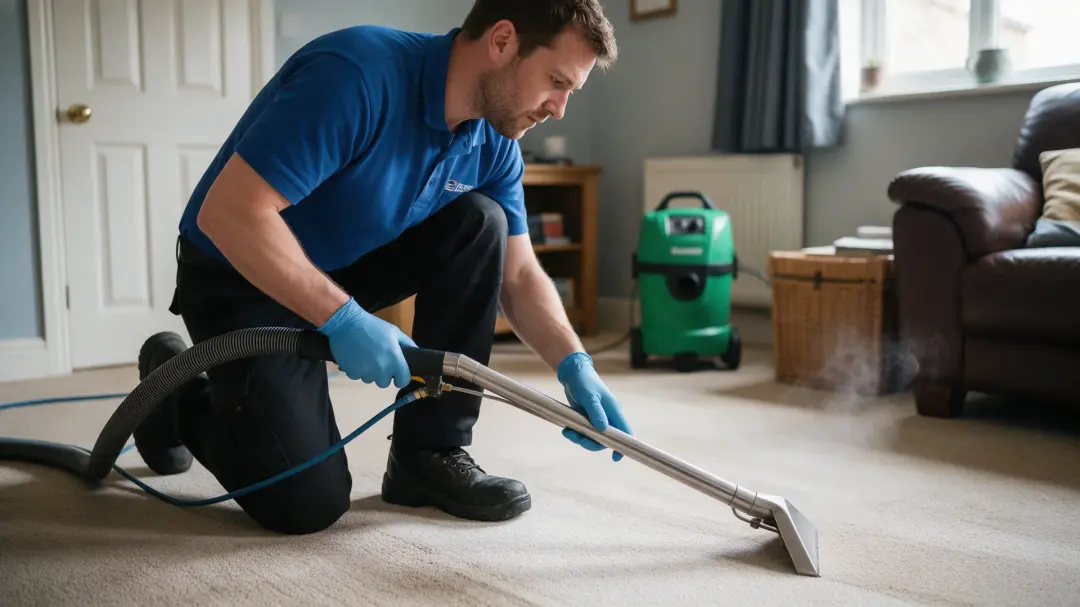
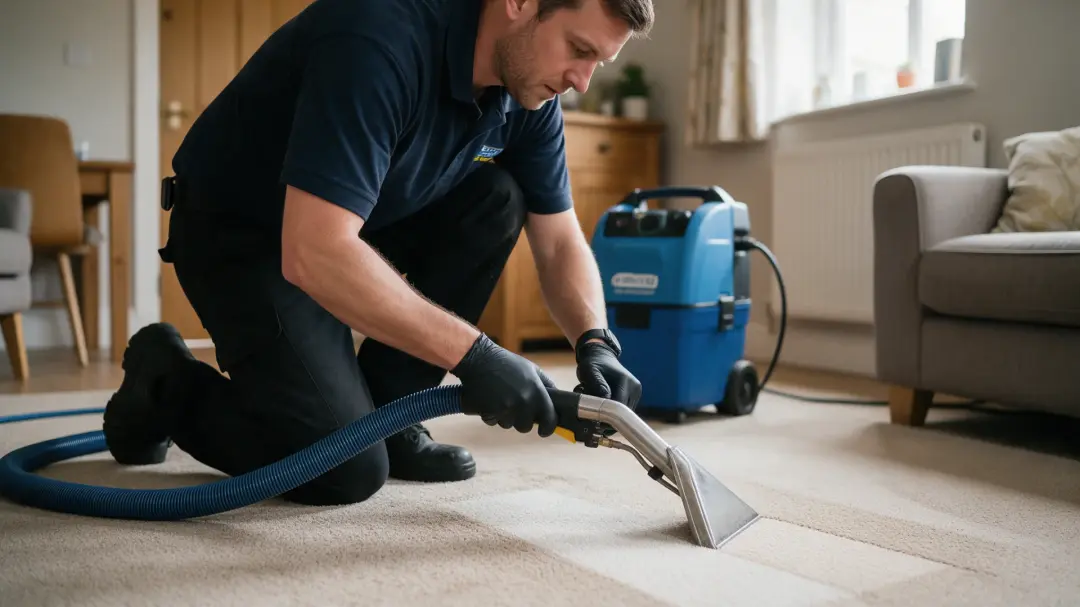
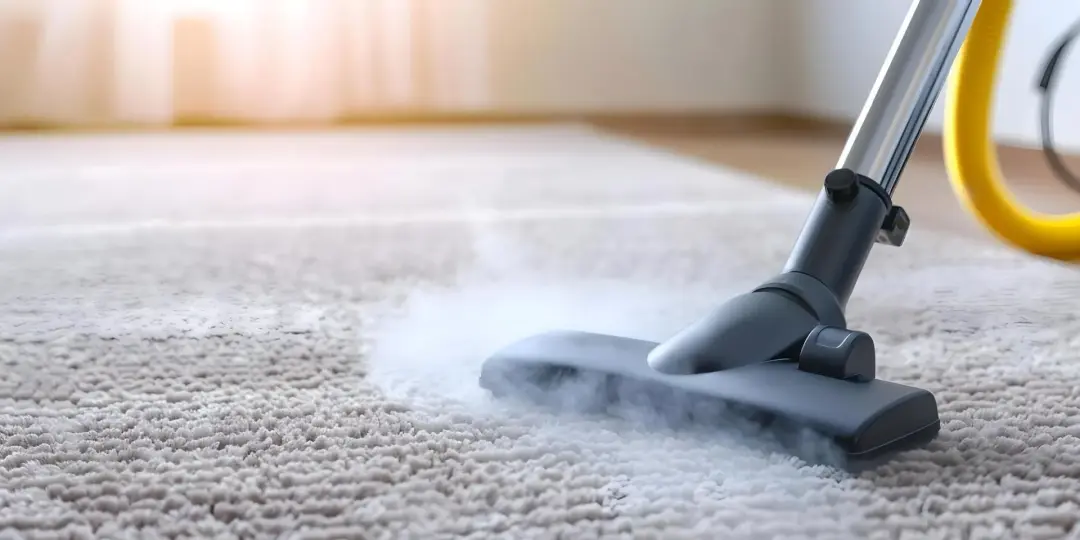
Any stains and marks are then treated, using suitable products, before the main cleaning begins. Many cleaners use hot water extraction or steam cleaning, and this method uses a mix of warm water and cleaning solution to loosen any dirt from the carpet. The machine then removes the water, dirt, and cleaning product from the fibres. Other methods, such as low-moisture cleaning or dry carpet cleaning, may be used when the office needs to dry quickly.
How to keep carpets cleaner for longer
Vacuuming regularly is one of the easiest ways to keep your carpet clean. Vacuuming removes loose dust, dirt, crumbs, and grit before they are pushed deeper into the carpet fibres.
Good entrance mats can also make a big difference, and this is because mats that are placed at doorways catch mud, rainwater, leaves, and grit before they reach the main carpeted areas. These mats should be cleaned often so they continue to work properly.
Any spills should be dealt with as soon as possible, and blotting the area carefully, instead of rubbing it, can help reduce the chance of a stain spreading or becoming permanent.
Creating an office carpet cleaning schedule
Without a clear plan, your carpet care routine can easily be forgotten about until stains, smells, or worn areas become obvious. Creating a schedule helps make sure your carpets are cleaned at the right times, rather than only when they start to look dirty.
A cleaning schedule can include daily vacuuming, weekly maintenance, stain checks, and deep cleanings at set times during the year. This makes it easier to manage busy areas that often collect dirt more. Overall, a planned carpet cleaning routine helps improve the appearance, hygiene, comfort, and long-term value of your office carpets.
Ambassador Carpets helps businesses keep their workplaces clean, fresh, and presentable. By using suitable equipment and safe cleaning methods, we can remove dirt, stains, dust, and odours from your office carpets. Our carpet cleaning services in Oxford, Witney and Carterton improve your hygiene, protect your carpet fibres, and create a more welcoming space for your staff.